Articles

WHEN COMPETITION MEANS COLLABORATION

Antonio Vegas García

sharing-economy-fcra

Nowadays the “sharing” or collaborative economy is a headline-grabbing concept, with widespread examples all over the world. From numerous apps for second-hand sales to some disruptive companies like Uber and Airbnb. According to Forbes, a magazine, the revenue for participants of peer-to-peer systems will surpass $3.5 billion this year, with growth exceeding 25%. Many think that this is the beginning of the end of the competition capitalism movement and the inception of the capitalism of collaboration. They cannot be more wrong.

Economic theory states that the more competition the better for the economy. Moreover, Ludwig von Mises, a well-known Austrian economist, wrote that capitalism is a mix between both collaboration and competition and furthermore that competition is a way of collaboration. Currently the rise of the collaborative economy has spotlighted his ideas.

The concept is quite simple. Consumers are able to get what they need from each other instead of always going to large organizations. That means that the mere collaborators are a competitor in the market, thereby increasing the competitiveness of the whole market and very likely increasing the efficiency.

Sharing economy take a variety of forms, often leveraging information technology to empower individuals, corporations, non-profits and government with information that enables distribution, sharing and reuse of excess capacity in goods and services. A commonly accepted premise is that when information about goods is shared, the value of those goods may increase, for the business, for individuals, and for the community.

A good example that illustrates the deepness of the changes caused by the peer-to-peer economy is the dialectic between crowdfunding and venture capitalist industry. With the rise of the crowdfunding many firms can get funds more easily than before, which, prima facie, could decrease the market for venture capitalists, who are the ones that use to provide liquidity to disruptive companies. Unlike the venture capitalists, crowdfunders do not take ownership, thus ceteris paribus the companies are keen to get funds from crowdfunders. However, venture capitalists not only provide monetary capital but also intellectual capital, like networking, good managers, thereby avoiding some first-comer mistakes. That is the reason there are plenty of firms receiving fund from venture capitalist. Even more, the sharing economy of the crowdfunders makes it harder for venture capitalists as they have to enhance their services, thereby increasing the overall efficiency.

The increasing importance of the sharing economy doesnt means the fade of competition, what it means is the high extent of the development of market competition.

Antonio Vegas García is a researcher from the Shalom Institute and has graduated with a masters degree of finance from the Universidad Carlos III de Madrid (Carlos III University of Madrid).

Articles

Privatization with Chinese Characters

Christopher Lingle

Gavle, SWEDEN

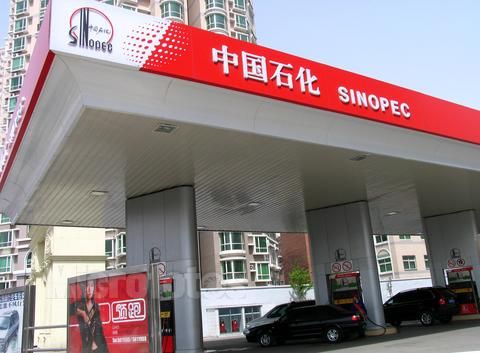
SINOPEC

Since China’s economic reforms began in the late 1970s, there has been considerable focus on transforming and restructuring state-owned enterprises (SOEs). Several encouraging signs indicate that steps are being taken in the right direction.

In the first instance, there has been a dramatic shift in the dominance of state enterprises. China’s non-state sector now produces about 70 percent of GDP. This sector has about 30 million enterprises employing over 70 million workers. Non-state enterprises produce nearly 40 percent of all traded goods, up from 1990 when they only accounted for 19 percent.

To date, more than 6,000 SOEs have been transformed to shareholding companies, even if not fully privatized. Communist orthodoxy has encouraged obfuscating language whereby equity diversification is applied in place of privatization.

Although PetroChina, China Unicom and Huaneng Power were partially privatized by selling shares on overseas stock markets, the largest and most valuable SOEs are controlled by Beijing. But all trading on the Chinese stock markets involves enterprises where the government holds at least 51 percent of outstanding shares, even though this is a reduction from government control of 75 percent of traded companies.

Now the bureaucracy that supervised most SOEs will control fewer than 200 of the largest ones. The smaller ones will be given to local authorities that can dispose of them after a new set of rules grants them full shareholder’s rights.

This round of “privatization” will be decidedly different from the first wave of sell offs in the late 1990s. In this current wave, local government bodies will be selling off their share of around 174,000 state-owned enterprises with combined asset valuation of about $500 billion.

Since most of these SOEs are relatively small, their sale may only have interest for domestic investors. Even so, potential foreign buyers would face considerable risks since China’s SOEs do operate differently from their counterparts in industrialized economies, making it is difficult to gauge their true condition.

Altering accounts and providing false impressions about the profitability of enterprises is commonplace in China. And with declining domestic spending and falling export growth, overall economic losses for state enterprises will expand and will have distorting knock-on effects for other sectors in its economy.

While bankrupt SOEs divert scarce resources from other enterprises that might be more productive; their most damaging effect is the weakening of the financial sector. When funds are provided to insolvent enterprises, the day of reckoning when inefficiencies have to be resolved by massive shutdowns is merely delayed. State banks have over a trillion yuan in non-performing loans making a mass default in the banking sector very likely.

Meanwhile, much of the hard-earned savings of the peasantry and workers has been squandered and the credibility of government banks as prudent managers has been shredded. Official estimates admit that at least one-quarter of total savings that the Chinese people have entrusted to state banks has been wasted, although the true figure almost certainly much higher.

At the same time, much of the capital initially raised on the domestic stock markets and abroad to finance the renovation of state-owned enterprises was paid out in salaries and for purchase of raw materials rather than invested. Shares issued to the public were for partial ownership in SOE factories that continued to be managed by many of the same people with many of the same bad habits. Unable to earn profits, they do not pay dividends to shareholders.

In keeping with the intent to lessen state control over its economy, China’s constitution has been amended to validate private enterprises through assigning them a legal status. However, it is one thing to declare the sanctity of private ownership and another thing to establish an independent judiciary to defend it and a competent legal system to enforce it. Claims about property rights are extremely complex and become more so when individual rights come into conflict with public interest.

Resolving contract disputes requires attorneys and judges that can refer to established case or common law guided by a constitutional framework. Like other former communist countries, China must build such institutions from scratch. It is not enough merely to change the incentives for people who have lived within a system that does not encourage initiative or penalize idleness.

While much of the non-state sector is owned or controlled by local or provincial governments, these enterprises do not operate under the same competitive conditions as private firms. And managers in local government enterprises have less accountability and shoulder less of the burden for failures.

China’s domestic private sector suffers from a myriad of problems. These include vague property rights, uncertain ownership structures and limited access rights to stock markets. At the same time, many of these also have weak corporate governance mechanisms and their financial records are shoddy, at best.

The economy suffered from a bias that favored state-owned enterprises by providing them preferential access to markets and financing. A real market economy requires that there be a shift away from a discretionary regulation and taxation towards a nondiscriminatory policies based upon general rules. This includes strengthening private property rights with an independent judicial system capable of enforcing them.

There must also be greater access to investment funds. As it is, a very small portion of bank credit goes to private firms that must rely heavily upon self-financing for expansion. And but a small fraction of the listings on the Shanghai and Shenzhen exchanges are truly private enterprises.

Unfortunately, socialist bureaucracies are exceedingly reluctant to relinquish ownership of government property to private investors or corporations, (unless to themselves or their cronies). In the first round of de-nationalization, the transition process resembled that of the former Soviet economies whereby “spontaneous privatization” meant that the most valuable assets were stripped by current managers and transferred to themselves or to friends or family.

Despite these risks, steps towards complete privatization of the Chinese economy must be undertaken, and the sooner the better. Unless there are gains in productivity from shifting more assets to more efficient and competitive private enterprises, China’s economy will not generate high enough growth rates to keep unemployment from rising or standards of living from falling.

Under the direction of Zhu Rongzhi, Beijing began to privatize smaller state-owned enterprises and shedding workers to improve operating efficiency. Up to 27 million state sector jobs were shed in the five years from 1998 while the number of SOEs was slashed. Even so, as indicated by a World Bank report, about 51 percent of SOEs were loss makers as of the end of 2000.

A new strategy for the reform of state-owned enterprise involves reconfiguring the relationship between the government and the enterprises it owns. As a first step, ownership of state companies will be transferred from the current ministries and commissions to a State Assets Supervision and Administration Commission (Sasac).

So far, the ownership and supervision of 196 enterprises with assets worth Rmb6,900bn ($834bn) had been transferred to Sasac. It remains unclear as to how many of China’s 174,000 state enterprises would be transferred to Sasac.

The state sector’s contribution to GDP fell from about 100 percent in the early 1980s to roughly 30 percent in 2000. China’s remaining 180,000 state-owned enterprises account for about one-quarter of industrial production. Officially, the state sector still employs about 70 million people and the valuation of Beijing’s assets is around 12.1 trillion yuan ($1.5 trillion). In the past five years, 27 million workers were laid off from SOEs.

Christopher Lingle is Professor of Economics at Universidad Francisco Marroquín in Guatemala and Global Strategist for eConoLytics.com. His E-mail address is: CLingle@ufm.edu. Shalom institute publishes this article written in 2011 by his authorization.

Articles

The end of Chinese false economic prosperity

William Hongsong Wang

Chinese stock crash

This January, my best friends in high school invited me to invest money in the Chinese stock market. Then I hesitated for a long time till this July, seeing the stock market crash and finally deciding to stay away from this place where one is apt to get into trouble. Earlier this year, they told me that I made a stupid decision, but now they praised my wisdom of not entering Chinese stock market to avoid loss and asked me how to analyze this stock crash from the perspective of the economic science.

Yes, the reason why I didn’t invest my little money into Chinese stock market is not that I don’t want to be a rich man, but that if I do this, I may become poorer than before. Why? Let us analyze Chinese economic situation generally at first.

According to media data, in the end of 2014, Chinese local government debt levels reached almost ¥ 25 trillion (US$ 4 trillion) [1]. And in many provinces across China, empty ghost cities are located there quietly. I calculated the investment sizes (due to lack of government transparency, I can only collect partial data) of the top-12 ghost cities from the news report, which reached US$ 8.38 billion [2]. Besides, many enterprises have been bankrupted because of over-investment induced by the ¥ 4 trillion (US$ 586 billion) stimulus plan in 2008. Those are just a tip of the iceberg. As seeing so many bad news which are worse than my imagination, now I have an illusion that maybe I’m in grace, not the strong and powerful China…

Another bad news is that, after the crazy Keynesian economic stimulus plan in 2008, in this March, Chinese central bank broke the silence and decided to lower benchmark five-year lending rate from 6.15% to 5.90% and started issuing more paper money in loan which meant that a new economic cycle will begin.

As an economic student with the knowledge of Austrian Business Cycle Theory, I don’t see this news being good for the future of the Chinese economy. I don’t see that there would be no economic bubble again in the Chinese stock market. That’s why I didn’t invest in my country’s stock market.

I’m lucky, because I don’t have any loss. But I heard not only one Chinese lost his millions and millions of asset in this turn of stock crash, then there’s no good news because the economic bubble has happened. This morning, the stocks in Shanghai Stock Exchange have dropped as much as 6% and this disaster is continuing. Sources have clearly pointed out that this is because of capital chain rupture and self-distrust from investors.

Economic common sense tells us that if this capital chain rupture extends to other economic sectors, China may face a very serious economic crisis, like the one in 1929 in United States. And the worse issue is, Chinese government has decided to devote more currency into stock market to save it. What will happen? Inflation and another turn of economic bubble. The more issuance of paper money by government and the fast expansion of fictitious economy caused by it will cause price signals’ disorder. Investors will say, if they don’t have the knowledge of business cycle, “wow, awesome! What a huge amount of loan, which I can apply for! Let me invest it and earn more!” Because of their optimism, more financial derivatives will be made to meet the need of blind investors, eventually causing mal-investment. Then if the capital chain cracks, we will see what we are seeing now in the Chinese Stock Market.

I don’t see that Chinese central government has the courage to stop making more economic bubble and it seems that Chinese deregulation reform has stagnated due to the obstruction from different interest groups. If I were to make a conclusion of this issue, I would say that we are facing the end of Chinese false economic prosperity.


Notes

[1] Zhang, Lianqi (2014) Chinese local government debt danger and opportunity. London:Financial Times Chinese. Available: http://www.ftchinese.com/story/001054454?full. [Accessed: 8 July 2015] Also see Wang, Yuguan (2013) The Warn on New Cities Plans from Chinese Central Government. Beijing: EnnWeekly. Available: http://www.ennweekly.com/2013/1012/12253.html.%5BAccessed: 8 July 2015]

[2]Those ghost cities are: Kangbashi New Area in Inner Mongolia Autonomous Region, Qingshuihe County in Inner Mongolia Autonomous Region, Bayannur City in Inner Mongolia Autonomous Region, Erenhot city in Inner Mongolia Autonomous Region, Zhengdong New Area in Henan Province; Hebi City in Henan Province, Xinyang City in Henan Province, Yinkou City in Liaonin Province, ChangZhou City in Jiangsu Province, Dantu District of Zhenjiang city in Jiangsu Province, Shiyan City in Hubei Province and Chenggong District of Yunnan Province.


William Hongsong Wang is a researcher from the Shalom Institute and has graduated with a masters degree of Austrian Economics from the Universidad Rey Juan Carlos in Spain (King Juan Carlos University).

If you like this article, please scan the QR code below on Alipay for sponsoring the author:

Alipaytest

Articles

State-owned enterprises, a failure of Chinese Keynesian experiment

William Hongsong Wang

IMG_20150223_082848

The chance of studying overseas is helping me become more and more international. That’s why I receive the same question all around the world, “William, do you think China will become a superpower in the 21st century?” Or I hear the compliment many times, “China has a strong market economy and it is becoming richer and richer!”

Unfortunately, due to the economic science and libertarian perspective, I ought to say “No. China will not become a superpower and there’s no ‘strong’ market economy in that country.” to my friends. I would like to ask them and myself a question, “In a society, if the government is killing people’s innovate ability by killing the liberty of free speech and NGOs, if authorities like your parents, bosses, teachers are strangling your entrepreneurship by their belief of patriarchy, would you still think that this society can achieve a long-term prosperity without respecting individualism?”

Maybe the whole countries with Confucian culture more or less have the similar problems. But the lucky issue for Japan, Korea, Taiwan and Singapore is, in a way, people in these countries have more liberty of free speech and more fair opportunities for managing small business than the ones in China. And what many Chinese people may envy them is the higher living standard in these countries, for which they are called “developed countries”.

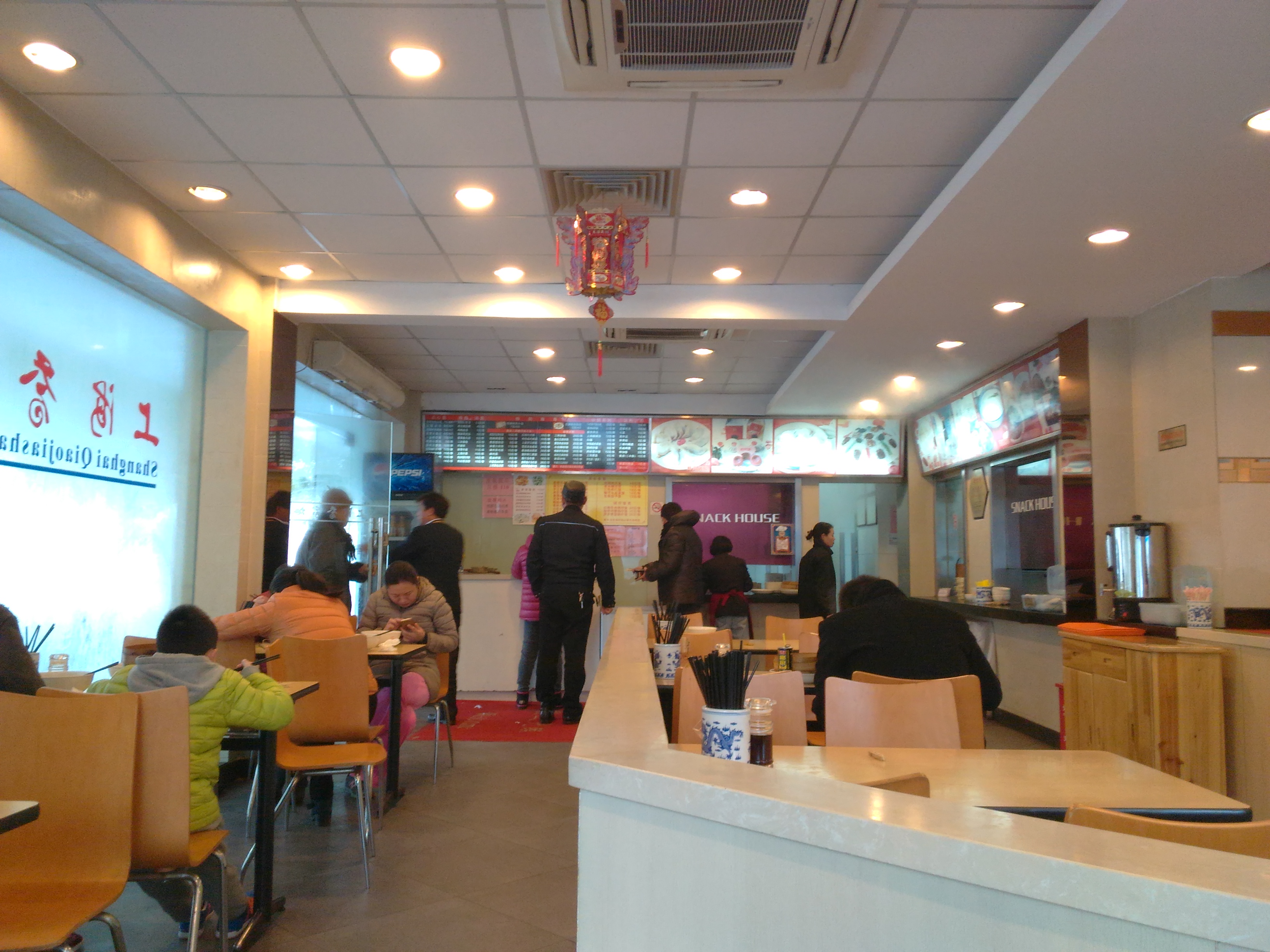
To return to the analysis of the question and compliment I mentioned in the first paragraph, let us see a key problem in Chinese economy: the state-owned enterprises. Even there has a snack bar, the government would like to nationalized it! In my homeland Shanghai, there’s a snack bar named Qiaojiashan which was established in 1909 and was quite popular among local people. But after the communist regime took over Shanghai, it became a state-owned enterprise. It is still popular because of many delicious foods provided by it, though as a national-owned monopoly the service there is inefficient and poor. Even Chinese government restarted doing economic deregulation and hoped Shanghai could allow private sectors to do more, nothing changes in my homeland. These time-honored brands in Shanghai still belong to government.

If you are a Westerner and then count all other industries in China, things may become crazy for you. Chinese government almost monopolized the whole educational, medical, petroleum, telecom industries. And if you want to make contact with banks, only in a few circumstances can you avoid the four major state-owned commercial banks.

In the economic common sense, the more a government monopolizes industries in a country, the more inefficient an economy is, and more corruption the government has. The myth why the real living standard of Chinese people has improved is just because of market reform and deregulation, not the governmental monopolies in considerable industries.

If these big-government policies only bring us the consequences above, it seems not too bad. But remember, as what Lord Acton said in the 19th century, “Power corrupts, and absolute power corrupts absolutely.” Chinese government controlled almost all the important finance resources, i.e. the four major state-owned commercial banks, you will arrive at a conclusion by logical deduction: the government might issue many paper money for its own sake because it’s so power and wayward.

This is exactly correct. Chinese government issued paper money for infrastructure construction before 2008. As a natural outcome, malinvestment, brought by easy-money policy, the slowdown of Chinese year-on-year GDP growth was 5.7% in the first quarter of 2009, which was the lowest growth rate in the last 10 years. But it didn’t learn from the lesson of economic bubble created by the state-controlled credit management system, Chinese central government issued ¥4 trillion ($586 billion) to stimulus economy, then another term of false prosperity and economic depression happened again. The year-on-year GDP growth dropped to 7.3% in the fourth quarter of 2014.

This current Chinese central government indeed has done many deregulation measures to let the market spontaneous order work better, but I’m afraid that if it still owns many national enterprises and national banks, there will be no hope for the health of Chinese economy in the future. And there’s no evidence which can tell us that the government has the willing to destroy its own enterprises and banks. Surly if China still has a Keynesian big-government, rent-seeking, corruption, governmental malinvestment, inflation, economic crisis (as what Austrian Business Cycle Theory told us) will happen again and again. Then, China may face the famous “middle income trap”.

That’s my answer to the question and compliment referred to in the first paragraph: the failure of Chinese Keynesian experiment. We will not see a real Chinese superpower (For me, a real superpower means the system of the country respects individual liberty and there’s no governmental intervention neither in domestic nor foreign issues.) and a richer China if there’s no fundamental change happening in Chinese economic policy.


William Hongsong Wang is a researcher from the Shalom Institute and has graduated with a masters degree of Austrian Economics from the Universidad Rey Juan Carlos in Spain (King Juan Carlos University).

If you like this article, please scan the QR code below on Alipay for sponsoring the author:

Alipaytest

文章, 信仰与自由

解放神学的经济学

“自由市场对人的宽容并没有超越上帝的标准,上帝对于正义或不正义均一视同仁。”……在西方,道德标准和对上帝的虔诚的下降与自由市场并没有因果关系。事实上,“自由社会基础的崩溃”,就是在人们背弃了对超越“一切国家或社会秩序”的信念和“内心深处的原则”后发生的。

繼續閱讀 “解放神学的经济学"

Articles

What’s wrong with the new Chinese economic stimulus plan, “One Belt, One Road”?

William Hongsong Wang

Chinese Version

IMG_20150222_111710

In the end of March, Chinese central government officially published a document for the establishment of “One Belt, One Road” (OBOR) project, which meant a new “Silk Road” will being built crossing the entire Central Asia, Western Asia, Southeast Asia and Southern Asia in the next recent years.

In the governmental project of OBOR, we can see all the countries related to the program will strengthen infrastructure construction, eliminate trade barriers, cooperate among financing, tourism, overseas study industry, IT industry, NGO and etc. What a dizzying project! And how can we analyze what policies belonging to the project are reasonable or not in the perspective on economics?

First of all, let’s see the policy of strengthening infrastructure construction mainly guided by the governments. As we know, every coin of tax using by government comes from taxpayers’ funds. The more government spends every coin from taxation, the fewer taxpayers could dominate in his daily life. And now, Chinese government may levy a higher tax for OBOR. As it’s very hard for us to follow how much government will spend on infrastructure construction of that project, how will we know whether Chinese government will waste the taxation or use new technology to cut the cost of infrastructure construction as what the innovation process can be done in free market? (Remember taxation belongs to taxpayers, not government, so we can strongly doubt that whether government has the incentive to save money and do innovation or not.)

Our worry is not unnecessary. Just in 2008, China issued ¥4 trillion ($586 billion) to stimulus economy, and many of them were spent on infrastructure construction which was proved later to be a huge waste: For example, many high ways and railways became useless projects later, and many empty cities appeared by real estate bubble. The economic stimulus package not only resulted in a big lavishness, but also an enormous inflation and redistribution of wealth in Chinese economy. Because of these consequences, this Chinese cabinet had to start the “Streamline Administration and Delegate more Power to Lower-level Governments” process.

According to the past facts, the worries about the abuse of power in “One Belt,  One Road” are reasonable. On one hand, Chinese government is doing market reform and deregulation, on another hand, “One Belt, One Road” project will cause increasing issue in paper money, government’s power and inflation which will lead to a new-term of economic bubble and redistribution of wealth and give negative impact on market reform.

Now we can say that governmental actions mentioned in “One Belt, One Road” project may not only wreck economic prosperity, but also lead to many further serious consequences.

But this does not mean OBOR project is totally wrong. What we can do is to bring the project back to economic laws and market reform.

We’ve seen that OBOR tries to eliminate trade barrier, encourage tourism, open overseas study and free flow of personnel which we believe are all good policies. In fact, if Chinese and other governments included in the project do more deregulation, common people, entrepreneurs and investors in these countries could find more opportunities whether in life goal or business by OBOR project. What governments should do is to give up their power in economic regulation, then communication among the people in these countries would become more frequent. If we ask what could be done in the infrastructure construction, I would say that governments could cancel more administrative examinations and approvals and encourage private investors playing more important rules in OBOR project.

Now we can make a conclusion: the wrong part in OBOR project is to increase the power of government (e.g. collecting more tax and expanding government agencies for the project), the correct part should be the policies of eliminating barriers for commercial and free flow of personnel in these countries, which must be the main perspective on “One Belt, One Road” project.

William Hongsong Wang is a researcher from the Shalom Institute and has graduated with a masters degree of Austrian Economics from the Universidad Rey Juan Carlos in Spain (King Juan Carlos University).

If you like this article, please scan the QR code below on Alipay for sponsoring the author:

Alipaytest

市场与中国, 文章

“一带一路”政策错在哪?又对在哪?

一方面,中国政府正在推进市场化改革、“简政放权”;而另一方面,政府主导的“一带一路”项目,又会造成银行增发货币、增加政府权力、进而影响纳税人财富的分配和通货膨胀,对政府的“简政放权”带来负能量。
繼續閱讀 ““一带一路”政策错在哪?又对在哪?"